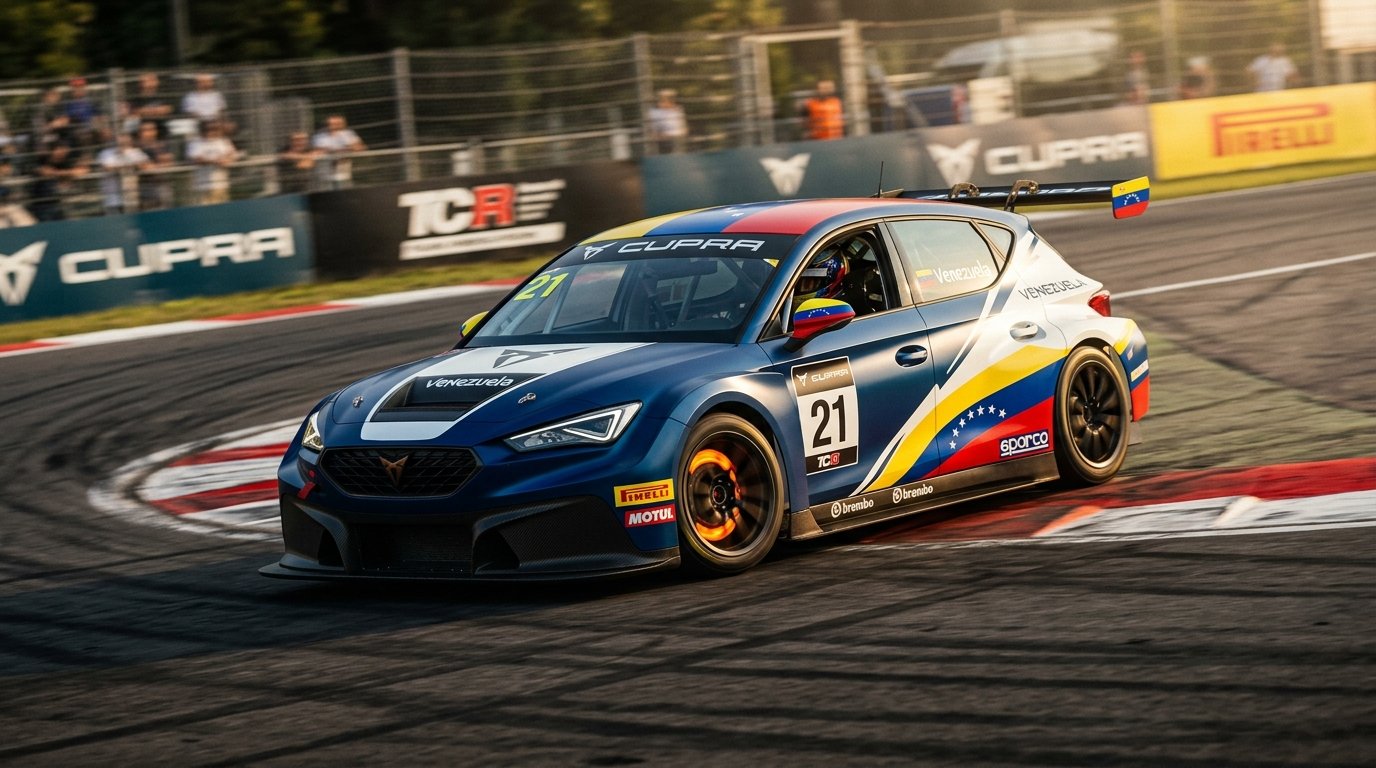


The Autódromo Internacional do Algarve (Portimão) is one of the most demanding circuits for a front-wheel-drive (FWD) chassis like the Cupra León Competición TCR. Its relentless elevation changes and blind, loaded corners punish the front-left tire aggressively.
In this article, I break down the baseline setup I run in the World Sim Series (WSS) championship behind the wheel of car #21.
🎯 Setup Objectives
- Mitigate chronic understeer in high-speed turns: Allow the rear axle to rotate subtly during brake release (trail braking).
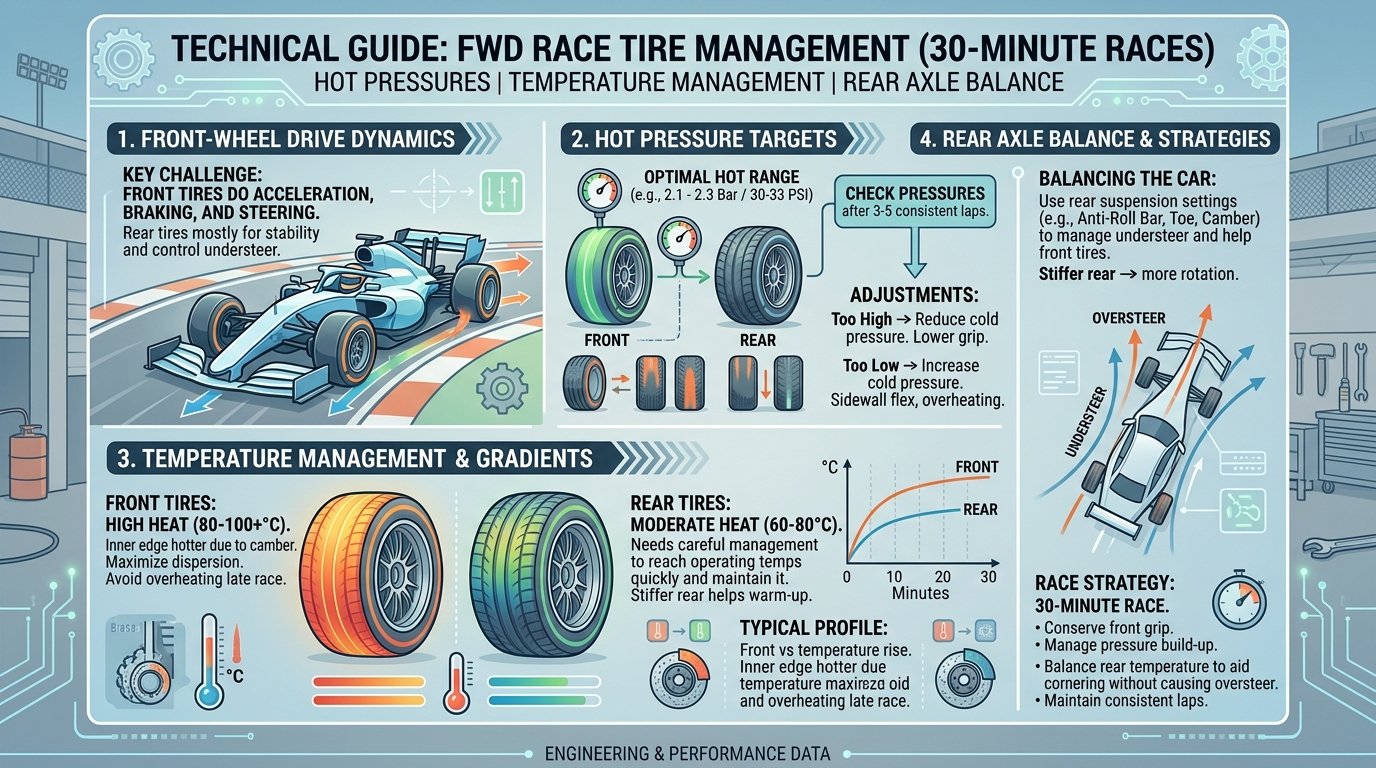
- Preserve the front tires: Prevent tread temperatures from exceeding 92°C during 30-minute stints.
- Downhill braking stability: Especially under heavy deceleration into Turn 1 and on the approach to the Torre VIP hairpin.
🔧 Key Telemetry Parameters
Below are the recommended baseline adjustment values:
| Component | Front Setting | Rear Setting | Technical Reasoning |
|---|---|---|---|
| Tire Pressures (Hot) | 27.2 psi | 26.5 psi | Maintains a flat contact patch during sustained cornering loads |
| Camber | -3.8° | -2.6° | Compensates for lateral roll under heavy cornering loads |
| Toe | -0.10° (Toe-out) | +0.15° (Toe-in) | Sharp turn-in bite / rear-end high-speed stability |
| Anti-Roll Bar (ARB) | Medium (3 of 5) | Stiff (4 of 5) | Promotes greater weight transfer to the rear axle |
💡 Paddock Tip: On an FWD race car, stiffening the rear anti-roll bar is the single most effective way to dial out mid-corner understeer without compromising exit traction.
🏎️ Turn 1 Driving Technique
The approach to Portimão's Turn 1 is negotiated in 5th gear at over 220 km/h:
[Main Straight] ──(225 km/h)──> [100m Braking] ──(Trail Braking)──> [Crest Apex] ──(Progressive Throttle)──> [Exit]- Phase 1 (100m Board): Initial brake application at 85% pressure in a straight line.
- Phase 2 (Trail Braking): Progressive brake bleed-off while aiming for the downhill apex. The rear axle lightens, tucking the front nose into the apex.
- Phase 3 (Traction): Wait to unwind steering angle before applying 100% throttle to avoid spinning the unweighted inside front wheel.
🏁 Conclusions and Next Steps
With this configuration, we managed to lower the lap time to a consistent 1:51.840, maintaining steady race pace with zero thermal degradation across the final 5 laps.
Do you have telemetry questions or want to request another track analysis? Leave a comment in the community portal or drop by the live Paddock streams.